
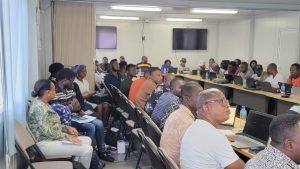
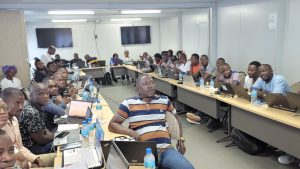
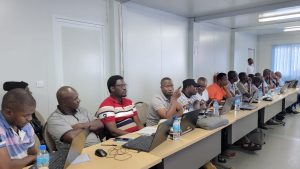
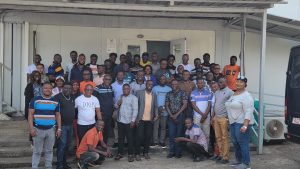
In a proactive move towards enhancing public health strategies, Sierra Leone’s Ministry of Health recently spearheaded a dynamic workshop focusing on nOPV2 and MR Campaign Micro-Planning. Held at the Emergency Operations Centre (EOC) on Wilkinson Road, Freetown, this two-day event served as a pivotal platform for training Monitoring and Evaluation (M&E) professionals and District Operational Officers (DOOs) on crucial aspects of data collection, analysis, and reporting.
The workshop, underscored by a commitment to community engagement, placed significant emphasis on fostering collaboration with local health authorities.
By prioritising such partnerships, the aim was to fortify the foundation for successful vaccination campaigns across Sierra Leone.
One of the cornerstone elements of effective public health initiatives is education. The workshop provided a robust educational framework for M&E professionals and DOOs, equipping them with essential skills to navigate the intricate landscape of data collection, analysis, and reporting. Through interactive sessions and practical exercises, participants gained valuable insights into optimising these processes to bolster vaccination campaign outcomes.
Recognising the pivotal role of community engagement in public health endeavours, the workshop placed a strong emphasis on fostering collaborative efforts with local stakeholders. By involving community leaders, health workers, and residents, the aim was to cultivate a sense of ownership and participation in vaccination campaigns. This bottom-up approach not only ensures greater reach but also fosters trust and cooperation within communities, key ingredients for the success of any public health intervention.
The significance of meticulous planning and execution cannot be overstated when it comes to public health campaigns. Through the workshop’s focus on micro-planning, participants gained valuable insights into developing tailored strategies to address the unique challenges of vaccination campaigns. By harnessing data-driven approaches and leveraging local expertise, Sierra Leone is poised to achieve sustainable impact in its efforts to combat vaccine-preventable diseases.
As Sierra Leone continues to prioritise public health initiatives, workshops like these serve as catalysts for progress. By investing in the capacity-building of healthcare professionals and fostering collaboration with local communities, the nation is laying a robust foundation for a healthier future. Moving forward, sustained commitment to education, engagement, and innovation will be key to overcoming the myriad challenges on the path to improved public health outcomes.
In conclusion, the recent workshop on nOPV2 and MR Campaign Micro-Planning stands as a demonstration of Sierra Leone’s unwavering dedication to strengthening its public health infrastructure. By equipping healthcare professionals with the tools and knowledge needed to navigate complex challenges, the nation is forging ahead on its journey towards a healthier, more resilient society.


